Frequently Asked Questions
Answers for families exploring a Regis Regal service dog.
Start With Your Family’s Questions
Explore the questions below about fit, timing, training, school, cost, and life with your dog. Each child’s placement is individual; these answers help you understand our approach before speaking with Cynthia.
Is a Service Dog Right for My Child?
Who is your program designed for?
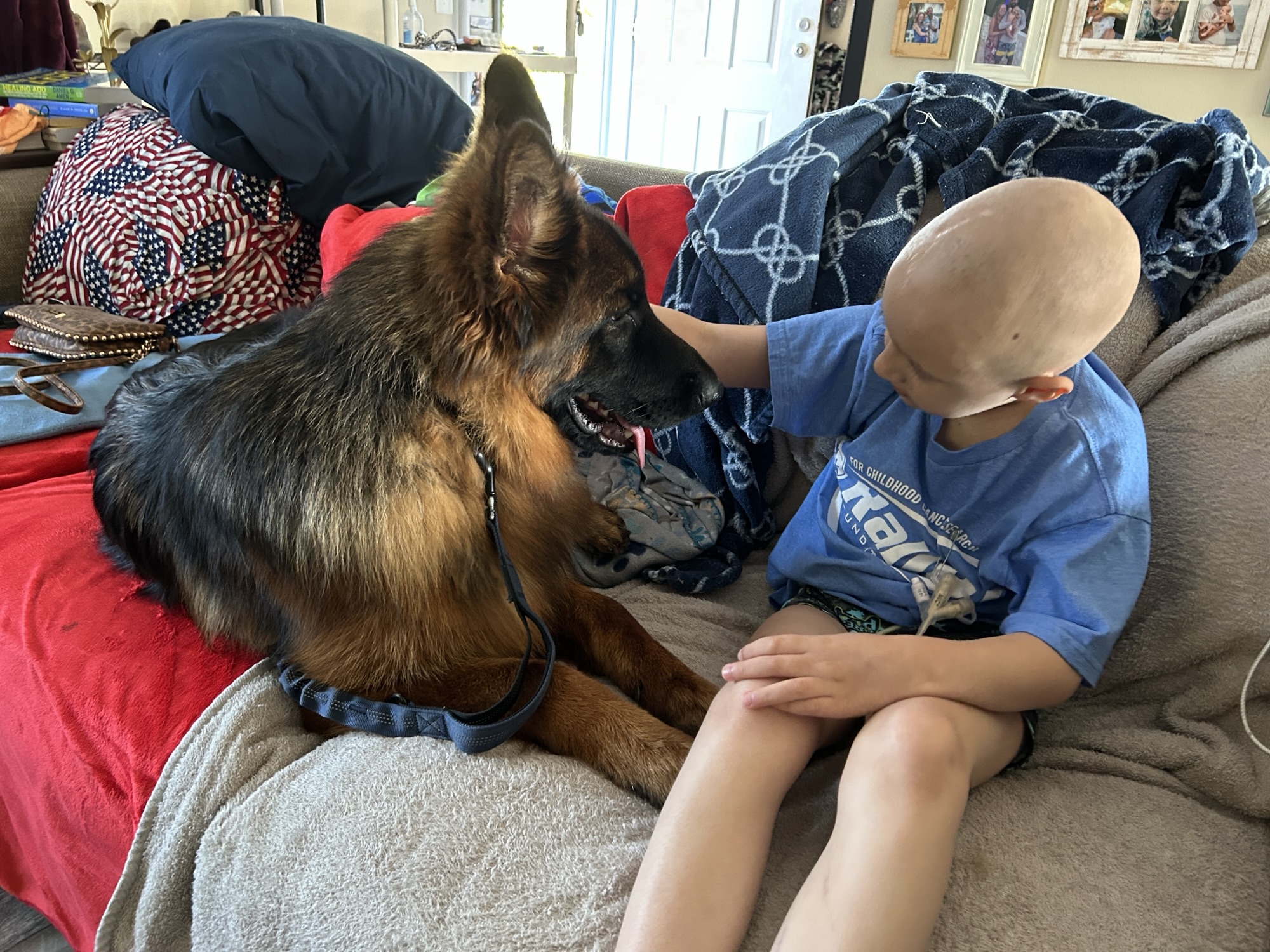
Our focus is children and the families supporting them. We offer individualized training for needs associated with autism, epilepsy, diabetes, and anxiety or depression. The starting point is the practical tasks your child needs and whether a suitable dog and working partnership are available.
How young can a child be?
We consider placements for children as young as one, depending on their needs, the family’s participation, and an appropriate match. Your child does not need to handle or care for the dog independently; parents and caregivers take an active role.
Why does Cynthia encourage starting younger?
In her experience with autism placements, beginning early offers an opportunity to build supportive routines while the child and family are still developing them. She often prefers to begin around ages two to three when the match is appropriate. That is an individual placement preference, not a promise of a particular outcome.
Does my child need to communicate verbally?
No. Tell Cynthia how your child communicates. For children who use a communication device, training can include responding to cues spoken through that device. Caregivers also learn how to give cues and recognize the dog’s responses.
Can older children or adults inquire?
Yes. Our website focuses on children, but older children and adults are welcome to inquire. Cynthia considers support needs, caregiver involvement, the available dogs, and the responsibilities of the partnership individually.
Matching, Timing & Preparation
How long does it usually take to receive a dog?
Our usual placement timeframe is approximately three to six months, depending on your child’s needs, the training required, and the availability of an appropriate dog. Some placements take longer. We’ll discuss your expected timeline before you commit.
Will my child receive a puppy, adolescent, or adult dog?
Most placements are adolescents. Adult dogs or a puppy development pathway may also be options. The right choice depends on your child’s needs, the dog’s maturity, and your household’s ability to participate in care and training.
How do you choose a dog for our family?
We breed, raise, and train our own German Shepherds, so we observe their development and temperament. Cynthia uses that knowledge alongside information about your child, routines, household, and support needs to recommend an appropriate match.
What is different about the puppy pathway?
Raising a puppy requires substantial daily participation. Puppies return to Regis Regal for additional age-appropriate training as they mature. We explain the schedule and commitment before recommending this pathway.
Will you need scent samples for my child’s training?
For epilepsy placements, Cynthia may request clothing worn around a seizure event to use in scent training. She will explain what she needs and how to collect and send it. Wait for her instructions rather than collecting or shipping samples before your consultation.
Delivery, Home Training & School
Do we have to travel to your facility for several weeks?
For our in-home delivery approach, Cynthia brings the dog to your location and helps your family practice in your everyday environment. You do not need to relocate for a three-week facility stay. The puppy development pathway has its own return-training arrangements.
What happens during the initial visit?
The initial visit typically lasts three to four days. You practice cues, learn the dog’s trained responses, and work through home routines and outings. We coordinate time with your family so the responsible adults can participate.
What if something needs more training after you arrive?
Working in your actual environment can reveal details that were not anticipated, such as a particular staircase or transition. Cynthia makes appropriate adjustments. If the dog needs further preparation, she can bring it back for focused training before returning to continue the transition.
Can you help with the transition to school?
Where arrangements allow, school support can include coordinating with staff and transportation, accompanying your child through school routines, and explaining the dog’s role to classmates. The scope is discussed for your placement in advance.
Can the dog ride the school bus, and who handles it at school?
Transportation and handling arrangements need to be coordinated with the school and bus provider. Cynthia has accompanied children and their dogs on the bus and through the school day during transitions. Families and staff discuss adult responsibilities, cues, alerts, and the dog’s care before the transition.
Daily Life & Lifetime Support
What happens as my child grows or changes schools?
We work with your family to adjust training as needs change. This can include new environments, school routines, or helping your child communicate more directly with the dog. All training is included for life; travel, lodging, and meals for in-person visits are separate.
Can the dog play and spend time with the rest of the family?
Yes. Service dogs need play, exercise, affection, rest, and opportunities to relax. Other family members can be part of the dog’s life. We help you establish routines that support both the working partnership and the dog’s wellbeing.
Can we have another dog in the house?
Another dog is not automatically a barrier. Tell Cynthia about the animals in your household, including their behavior and routines, so she can discuss compatibility and introduction arrangements for a potential placement.
Who is responsible for daily care?
Your family needs a plan for feeding, exercise, grooming, veterinary care, rest, and consistent practice. For a young child, a parent or caregiver takes responsibility. We help you incorporate the dog’s needs into your household’s routines.
Do German Shepherds shed?
Yes. Plan for regular brushing and household cleaning. Discuss allergies, grooming needs, and your comfort living with a large dog before moving forward.
Cost, Funding & Payment
How much does a Regis Regal service dog cost?
Service dogs range from $30,000 to $55,000. The specific investment depends on the type of training, the age and needs of the person the dog will assist, and the age of the selected dog.
What training is included in the price?
All training is included for life, including adjustments as your child grows or routines change. That may include preparing for school or helping a dog shift from communicating with a parent to communicating directly with the child.
Are delivery and travel expenses included?
No. Travel, lodging, and meals associated with delivery and other in-person training visits are billed separately. Include those expenses alongside the dog’s price when planning your budget.
How much is the deposit, and when are payments due?
Deposit amounts and payment timelines depend on the type of training and the age of the dog selected for your child. Cynthia will explain the specific terms before you commit. Discuss your funding timeline with her if you are fundraising or applying for assistance.
How do families fund a service dog?
Families may combine savings, contributions from relatives or friends, community fundraising, or outside assistance. Some use independent financing. If applying for a grant, confirm that it can fund a privately purchased dog from Regis Regal. Ask your insurer directly about your plan and get any coverage decision in writing before relying on reimbursement.
Service Dog Basics & Getting Started
How is a service dog different from an emotional support animal?
A service dog is trained to perform specific work or tasks related to a person’s disability. Comfort from an animal’s presence alone does not make it a service dog under the ADA. See the U.S. Department of Justice guidance below for more detail.
Does a service dog need a vest or service animal certificate?
The ADA does not require a vest or service animal certification. Local vaccination and dog-licensing rules still apply. A vest can be a useful visual cue that a dog is working; it is not what creates service animal access rights.
Where can my child take a service dog?
Under the ADA, trained service dogs generally accompany their handlers in areas open to the public, subject to specific rules and exceptions. School and air-travel arrangements deserve advance planning. Refer to official guidance rather than assuming every setting has identical requirements.
Does a dog replace medical care, monitoring, or supervision?
No. The dog’s tasks work alongside your child’s existing care and supervision arrangements. During training, your family learns the dog’s specific role and how to respond within your child’s care routines.
What should we read before applying?
Start with Investment & Funding, Our Service Dog Process, and Is Your Child a Good Candidate? Those pages explain the commitment and help you prepare for a focused conversation with Cynthia. Our application page brings those three resources together.
Official reference: U.S. Department of Justice service animal FAQs.
More From Cynthia
Watch Cynthia discuss common questions about service dogs and the Regis Regal program.