When you’re considering a service dog for your child, the questions rarely stop at home.
Can the dog ride the school bus? What happens during class, lunch, or recess? Will the teachers know what to do? How will the other children react?
At Regis Regal, we understand that a successful school transition involves more than preparing the dog. It involves helping the people around your child understand how the partnership works.
Cynthia Kelly works with families and school teams to turn those questions into practical routines.
Preparation Starts Before the First School Day
Before bringing a dog into the school environment, Cynthia talks with the people who will be involved in the child’s day. Depending on the placement, that may include administrators, teachers, aides, and transportation staff.
The conversation focuses on what the dog has been trained to do and how the adults will support the partnership.
Who will help with handling? What does the dog’s alert look like? What should staff do when they notice it? Where will the dog settle during class? What happens during activities when the child and dog need a different arrangement?
These details help everyone understand their role before the dog arrives.
Transportation deserves its own conversation, too. The school and the bus provider may be separate organizations, so preparing one does not automatically prepare the other.
From the Bus Stop to the Classroom
Cynthia’s approach is to work through the child’s actual routine.
In one school transition she described, Cynthia arrived at the family’s home early in the morning to help the child and family prepare to handle the dog during the school day. She then walked with the child and his dog to the bus stop and rode the school bus alongside them.
At school, she accompanied the child and dog through the day, observing how the partnership worked in the classroom, hallways, activities, and recess.
A crowded bus entrance, a noisy hallway, or a classroom transition can introduce situations that cannot always be predicted at a training facility. Working through those moments together lets Cynthia identify adjustments and guide the school team in the environment where the partnership will be used.
The school support included in each placement is discussed in advance and coordinated with the family and school.
Helping Staff Understand What to Do
For many educators, this may be their first experience with a student’s service dog.
Their questions are often practical. What are their responsibilities? How do they respond if the child becomes distressed? How do they keep the dog safe? What happens during gym or recess?
Cynthia explains the dog’s trained responses and demonstrates relevant cues and handling routines. If the dog is trained to alert, the responsible adults need to know what that particular alert looks like and what action they should take.
The plan also needs to address the dog’s daily needs, including water, rest, and toileting arrangements.
The goal is for staff to feel prepared, with clear responsibilities and a shared understanding of how the dog fits into the student’s day.
Understanding Service Dog Access
Service dogs are covered by disability access laws, which are separate from a school’s general rules about pets. A “no pets” policy does not determine a student’s right to be accompanied by a service dog.
Cynthia helps families and school staff understand the dog’s working role, discuss access questions, and establish practical handling and care arrangements.
Federal guidance recognizes that some K–12 students may need assistance from school staff to handle their service animal. That is distinct from assuming that every aspect of the dog’s care automatically becomes the teacher’s responsibility. Those arrangements need to be discussed clearly.
The U.S. Department of Justice’s service animal FAQs are a useful starting point for families and school teams learning about access, handling, and care responsibilities.
Teaching Classmates How to Interact With a Working Dog
A dog arriving at school will attract attention. Children may be excited, curious, or unsure what they are allowed to do.
Cynthia often addresses this through an assembly with the student’s grade. She explains that the dog has a job and helps classmates understand how to behave around a working service dog.
That includes giving the dog space and avoiding calling, feeding, or touching the dog without permission.
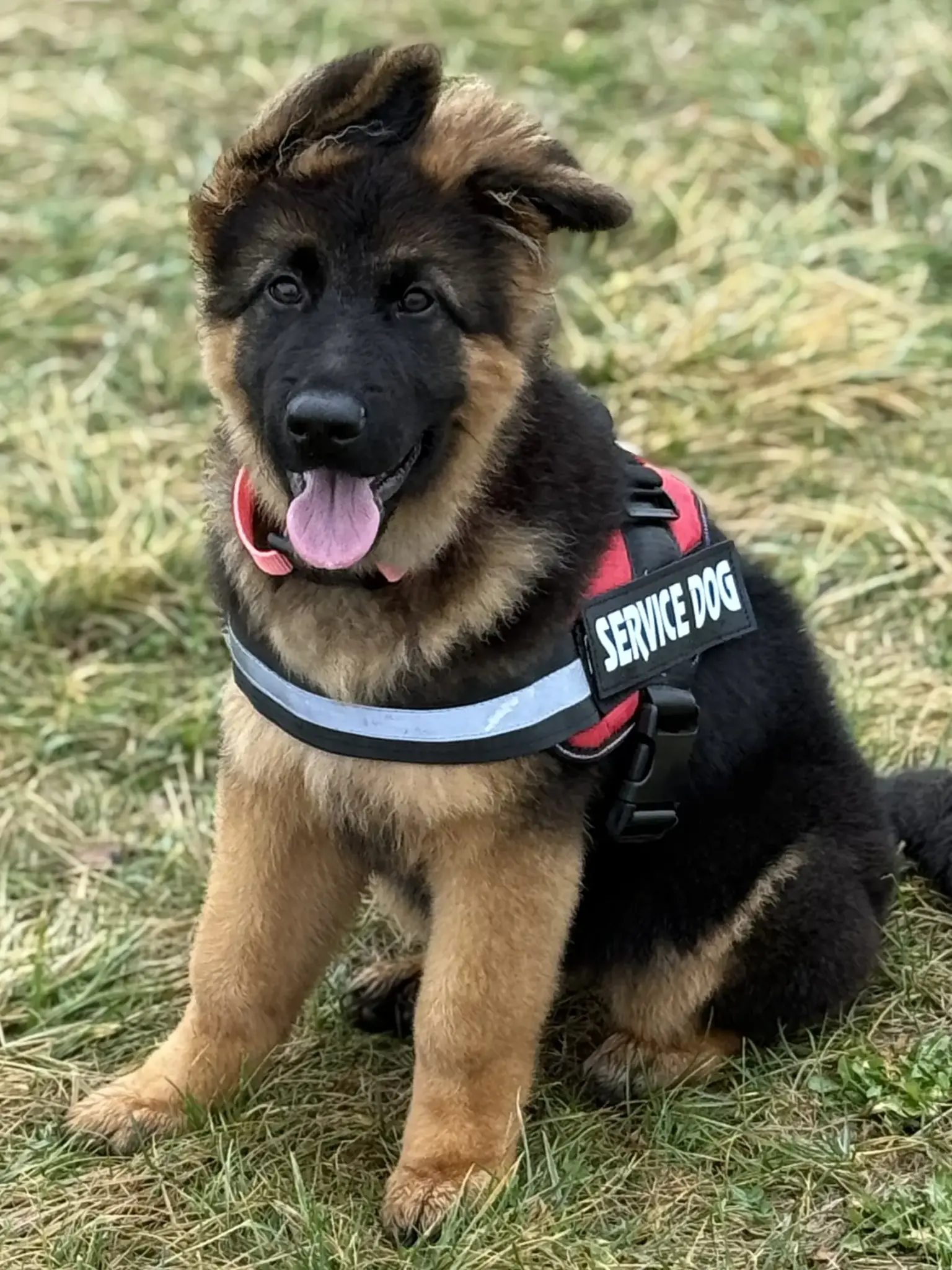
The vest provides a helpful visual cue that the dog is working, although a vest is not what creates service animal rights under the ADA.
Where appropriate, Cynthia also arranges a supervised classroom introduction or circle time. With the child’s agreement and the teacher’s direction, classmates may have an opportunity to meet the dog.
This gives their curiosity a place and helps establish clear expectations for the rest of the school day.
Planning for Recess, Gym, and Transitions
A school day includes much more than sitting at a desk.
There are noisy transitions, playground activities, different classrooms, and moments when a child needs extra support. The dog’s place and the adults’ responsibilities need to be considered in each setting.
Cynthia describes working with staff on where the dog should settle during an activity, which cues to use, and how the child and dog reconnect afterward.
The arrangement depends on the child’s needs and the dog’s tasks. Practicing it together helps the school team understand the plan rather than leaving them to improvise.
Support Continues as Your Child Grows
Starting school, moving to a new classroom, or changing schools can introduce new routines. As children become more independent, the way they communicate with their dog may change, too.
A dog that initially communicates primarily with a parent may need additional training to communicate directly with the child.
At Regis Regal, all training is included for life, including these adjustments. Travel, lodging, and meals for in-person visits are billed separately.
Your family can continue reaching out as questions and training needs arise.
Explore the Next Step for Your Family
Understanding how a service dog becomes part of your child’s school day is one part of the decision. Learn how matching, training, and delivery work, or explore whether this partnership could fit your child and family.